



Table of Contents
ToggleA business owner is about to launch a new campaign.
One ad says:
“Save 20% today. Fast delivery. Free consultation. Proven results.”
The other ad says:
“Feel confident about your next move. Work with a team that understands your goals.”
Both ads could work.
But they work for different reasons.
That is where emotional vs rational advertising becomes important.
Quick answer:
Use emotional advertising when your audience needs trust, desire, confidence, comfort, identity, or connection.
Use rational advertising when your audience needs proof, pricing, features, comparisons, guarantees, specifications, or risk reduction.
Use both when your customer needs to feel interested first, then needs logical proof before taking action.
The real question is not, “Which one is better?”
The better question is:
What does your customer need to feel, understand, and believe before they take action?
Emotional advertising focuses on feelings.
It connects with the buyer through emotions like trust, comfort, pride, fear, relief, excitement, belonging, or confidence.
For example, a dental clinic may not only advertise straight teeth. It may advertise the confidence of smiling without hesitation.
A home renovation company may not only advertise flooring, cabinets, and permits. It may advertise the feeling of finally loving your home.
Rational advertising focuses on logic.
It uses facts, benefits, pricing, features, guarantees, reviews, statistics, comparisons, timelines, or clear proof.
For example, a SaaS company may advertise:
That is rational appeal in advertising.
The phrase emotional vs logical marketing is often used in the same way. Emotional marketing helps people feel why they should care. Logical marketing helps people understand why the choice makes sense.
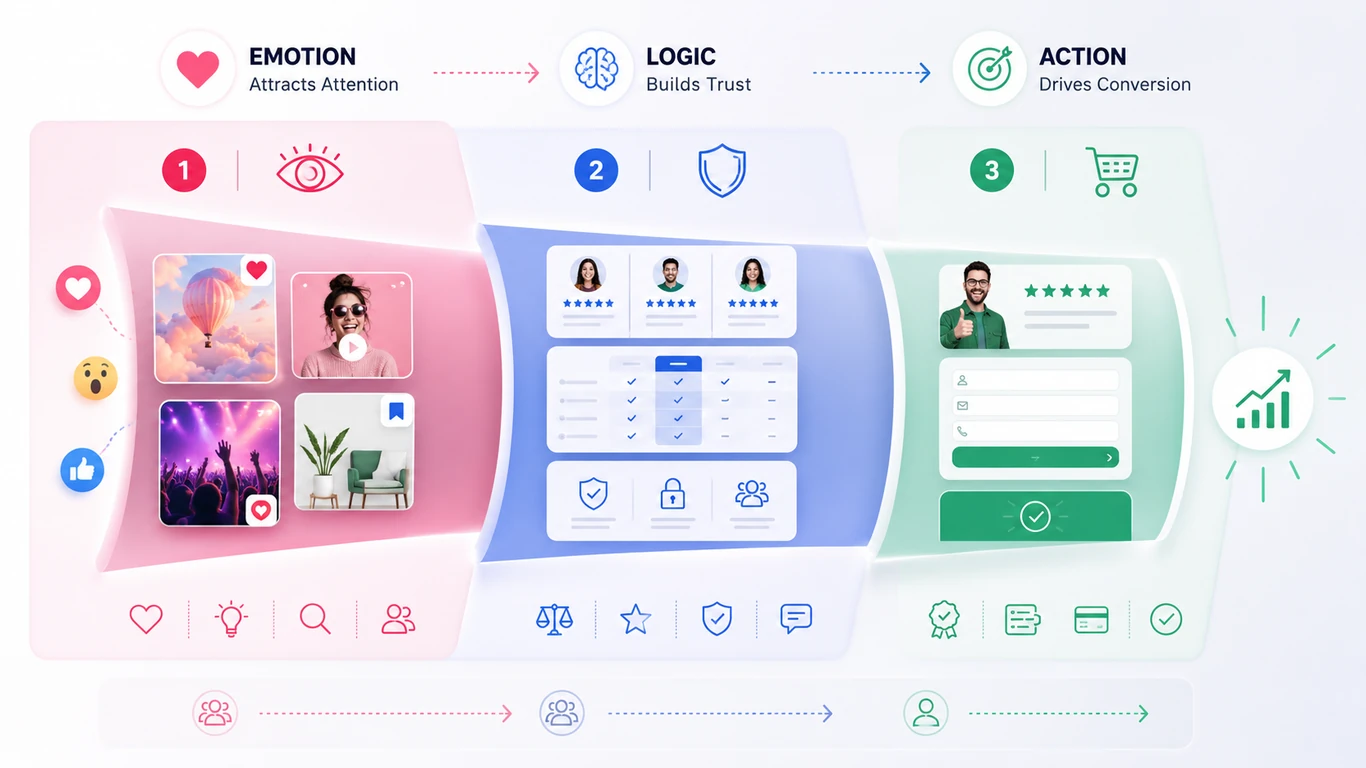
In real campaigns, both matter.
A buyer may feel interested because of emotion, but still need rational proof before booking a call, filling out a form, or making a purchase.
Read More: How to Get Marketing Leads
To understand thinking vs feeling the psychology of advertising, think about how people actually make decisions.
People are not robots.
Even in serious purchases, they do not only compare features and prices. They also ask themselves:
Those questions are emotional.
But rational proof still matters.
For low-risk purchases, emotion may lead the decision faster. A person buying a meal, clothing item, beauty product, or fitness program may respond quickly to desire, mood, lifestyle, or identity.
For high-risk purchases, logic becomes more important. A company choosing a marketing agency, legal service, healthcare provider, or business software needs more proof before making a decision.
That is why strong advertising often follows this pattern:
Read More: Emotional Adverts

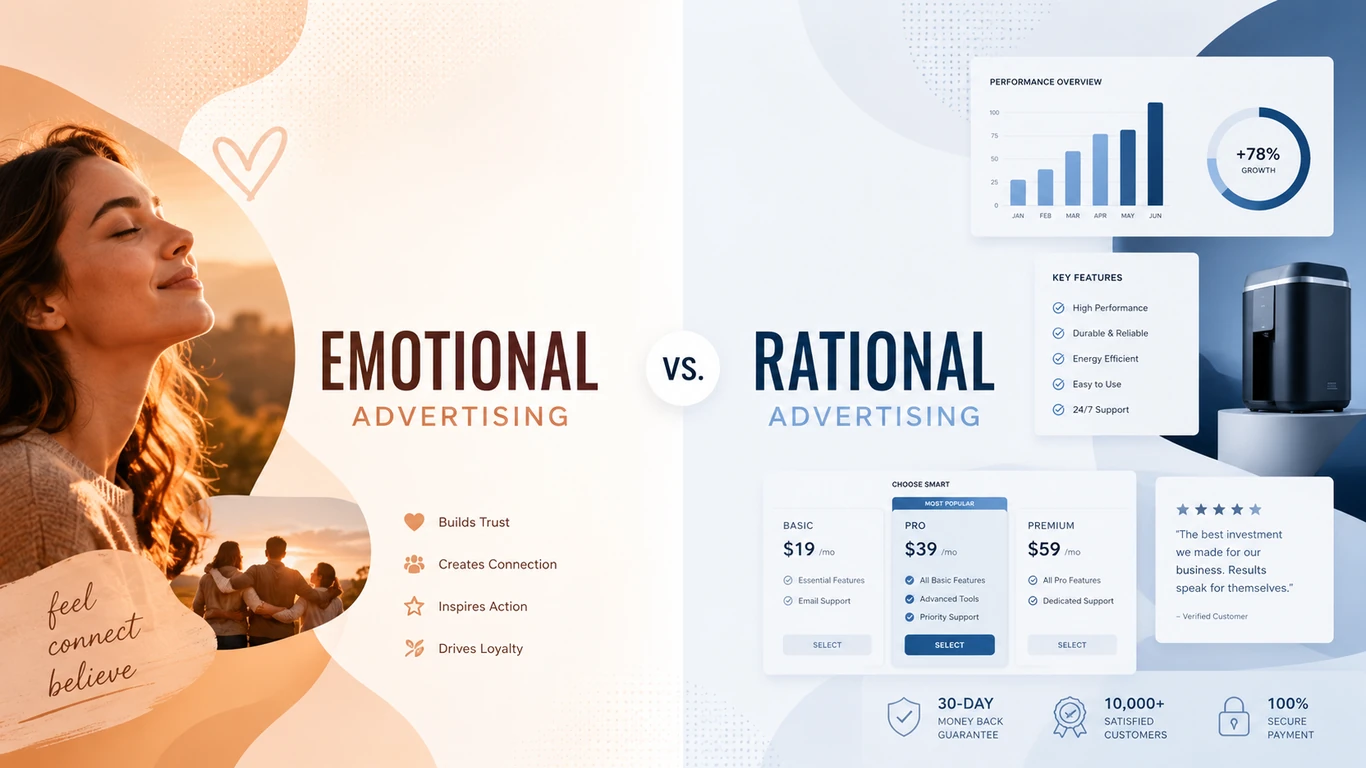
When comparing emotional vs rational appeals in advertising, the biggest difference is the type of decision support each one gives the customer.
Emotional advertising:
Read More: Storytelling in Advertising
Rational advertising:
Understanding when to use rational vs emotional ads helps you avoid wasting budget on the wrong message.
For B2B services, rational proof matters a lot.
Buyers want to know:
But B2B is not emotionless.
A business owner choosing a marketing agency also wants confidence, safety, reputation, and peace of mind.
A good B2B ad might say:
“Stop guessing with your ad budget. Get a clear strategy built around your goals, audience, and conversion data.”
The emotional part is relief from guessing.
The rational part is strategy, audience, and conversion data.
For B2C products, emotion often leads the first click.
People buy based on lifestyle, taste, comfort, beauty, identity, status, or enjoyment.
But rational support still helps.
Customers still care about:
A skincare brand, for example, can use emotion to sell confidence, but use rational proof to show ingredients, customer reviews, and product details.
A local restaurant may use emotional advertising to show atmosphere, taste, family, and community.
But it also needs rational details like location, opening hours, menu, pricing, and reviews.
A local service company may advertise fast response, licensed technicians, transparent quotes, and real customer testimonials.
Healthcare and dental marketing should be careful with exaggerated emotional claims.
Emotion can help reduce fear, build comfort, and create confidence.
Rational advertising should support the message with treatment options, consultation details, credentials, process, and patient education.
For example:
“Feel more confident about your smile. Book a consultation and understand your options clearly before starting treatment.”
This combines comfort with clarity.
For home services, people often feel stress first.
A broken HVAC system, renovation decision, plumbing issue, or roofing problem creates urgency.
Emotional angle:
“Get your home back to normal without the stress.”
Rational angle:
“Licensed team. Upfront pricing. Same-week availability.”
Together, they work better.
Read More: Lead Scoring
SaaS buyers usually need rational proof.
They compare features, integrations, support, pricing, security, and onboarding.
But emotion still matters.
The emotional promise may be:
A SaaS ad should not only explain what the product does. It should also show why the user’s workday becomes easier.
Luxury and lifestyle brands often rely more on emotion.
They sell identity, taste, exclusivity, confidence, and aspiration.
But even luxury buyers need rational support. They may still care about quality, craftsmanship, materials, durability, service, and authenticity.
Here are some practical rational appeal advertising examples that show how logic can support better decisions.
Business type: Marketing agency
Message:
“Get a campaign strategy based on audience intent, platform data, and conversion goals.”
Why it is rational:
It explains the method behind the service.
When it works best:
When a business owner is comparing agencies and wants a clear reason to trust one.
This is also one of the strongest rational advertising examples for B2B because it focuses on process and decision confidence.
Business type: Orthodontic or dental clinic
Message:
“Book a free consultation to compare braces, aligners, treatment length, and payment options.”
Why it is rational:
It answers the practical questions patients ask before starting.
When it works best:
When the patient is interested but needs clarity before booking.
Business type: Project management software
Message:
“Reduce reporting time with automated dashboards and team integrations.”
Why it is rational:
It gives a clear benefit and explains how the product helps.
When it works best:
When buyers are actively comparing software options.
Read More: The Strategic Guide to Paid Advertising
Business type: Home renovation service
Message:
“Licensed team, detailed quote, clear timeline, and project management from start to finish.”
Why it is rational:
It reduces risk and explains the process.
When it works best:
When customers are worried about cost, delays, or poor workmanship.
Business type: Restaurant
Message:
“Family platter for four, available daily, with online ordering and free local delivery over $50.”
Why it is rational:
It gives price, quantity, availability, and ordering details.
When it works best:
When customers are ready to order and need clear information.
Rational appeal advertising works best when the buyer is asking:
“Why should I choose this option?”
Read More: Local Marketing Ideas for Small Business
Emotional advertising is powerful because it speaks to what people want to feel.
A local gym may say:
“Feel stronger, more confident, and more in control of your day.”
A restaurant may say:
“Bring the family together over a meal that feels like home.”
A marketing agency may say:
“Stop feeling invisible online. Build a brand people remember.”
These are examples of emotional appeal advertising because they connect the offer to feelings like confidence, belonging, relief, or recognition.
But emotional ads still need support.
If the gym has no reviews, no pricing, and no clear offer, people may feel interested but not take action.
If the restaurant has beautiful photos but no menu, location, or ordering option, the ad may get attention but not sales.
If the marketing agency promises visibility but does not explain the process, the message may sound nice but not convincing.
The key point is simple:
There is a common mistake in advertising strategy:
People assume B2B is rational and B2C is emotional.
That is too simple.
B2B emotional marketing matters because business buyers are still people.
They care about trust, risk, reputation, confidence, and career safety.
A manager choosing a service provider may think:
Those are emotional concerns.
At the same time, B2B buyers need rational support. They want proof, process, data, experience, case studies, and clear next steps.
B2C emotional marketing is also not purely emotional.
A customer buying clothing, food, dental treatment, skincare, furniture, or fitness services may respond emotionally first. But they still look for reviews, pricing, quality, photos, delivery details, and guarantees.
So instead of thinking “B2B equals logic” and “B2C equals emotion,” think like this:

Many businesses do not fail because they choose emotional or rational advertising.
They fail because they use the wrong message at the wrong stage.
A few common mistakes include:
For example, a brand awareness ad can be emotional because the goal is attention and connection.
But a retargeting ad may need more rational proof because the customer already knows the brand and now needs a reason to act.
A Google Search ad may need direct, practical messaging because the user is already searching for a solution.
A social media video may need a stronger emotional hook because the user was not actively looking for the product.
The best advertising angle should match the customer’s mindset, not just the business owner’s personal preference.
Read More: Small Business Advertising

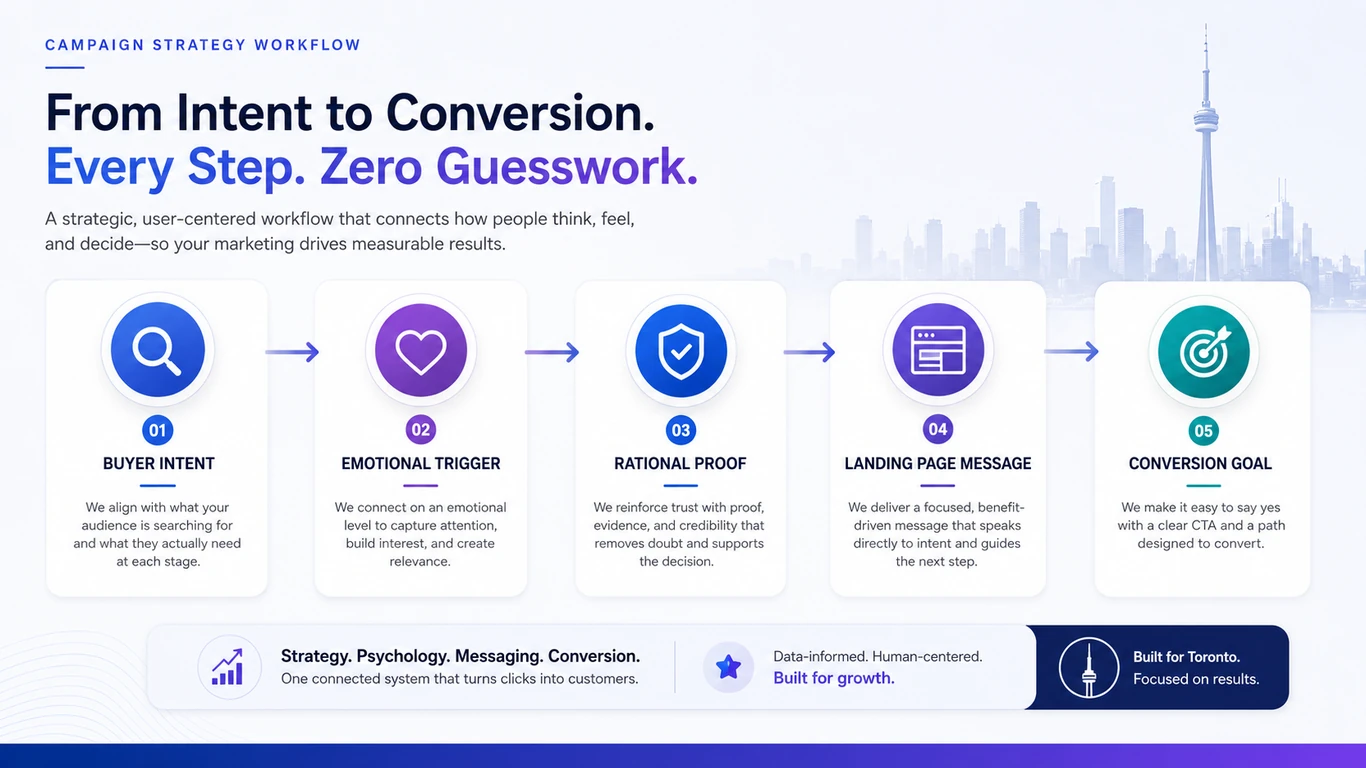
At Raadwindeal, the goal is not to choose emotional or rational advertising randomly.
The right angle depends on the audience, offer, platform, and buyer journey.
Before choosing the message, we usually look at four things:
Is the customer discovering, comparing, or ready to buy?
A person seeing your brand for the first time may need an emotional reason to care.
A person searching for your service on Google may need a rational reason to choose you.
What feeling is blocking or motivating the decision?
The customer may feel confused, stressed, excited, insecure, curious, frustrated, or ready for change.
A strong ad should understand that emotion before presenting the offer.
What evidence does the buyer need before trusting the offer?
This may include reviews, pricing, timelines, service details, before-and-after examples, case studies, FAQs, guarantees, or clear process steps.
Does the ad, landing page, and CTA continue the same message?
If the ad promises confidence, the landing page should build confidence.
If the ad promises clear pricing, the landing page should make pricing or quote details easy to understand.
If the ad focuses on trust, the page should show testimonials, proof, and credibility signals.
This helps avoid random creative decisions and builds ads around how people actually make decisions.
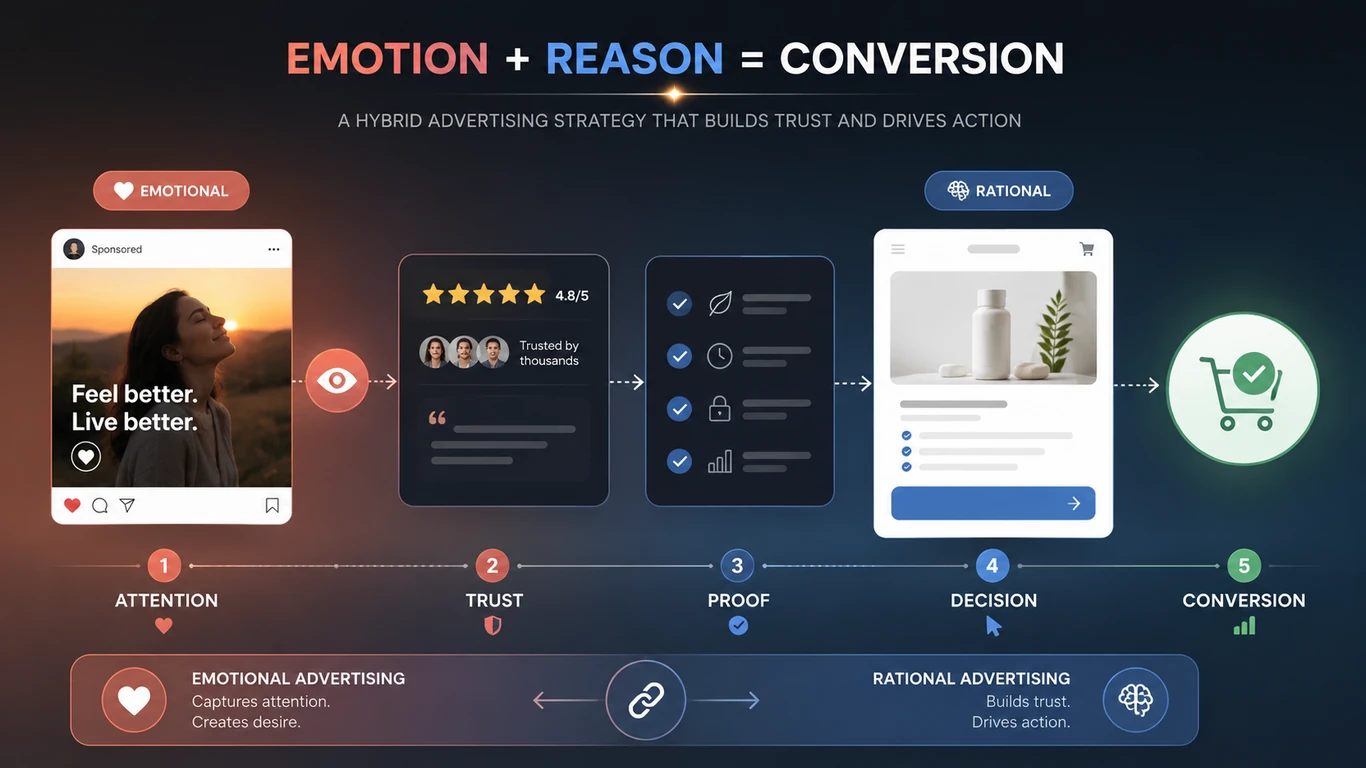
For many campaigns, the best structure is hybrid:
Use this simple checklist before launching your next campaign.
Use a more emotional ad if:
Use a more rational ad if:
Use both if:
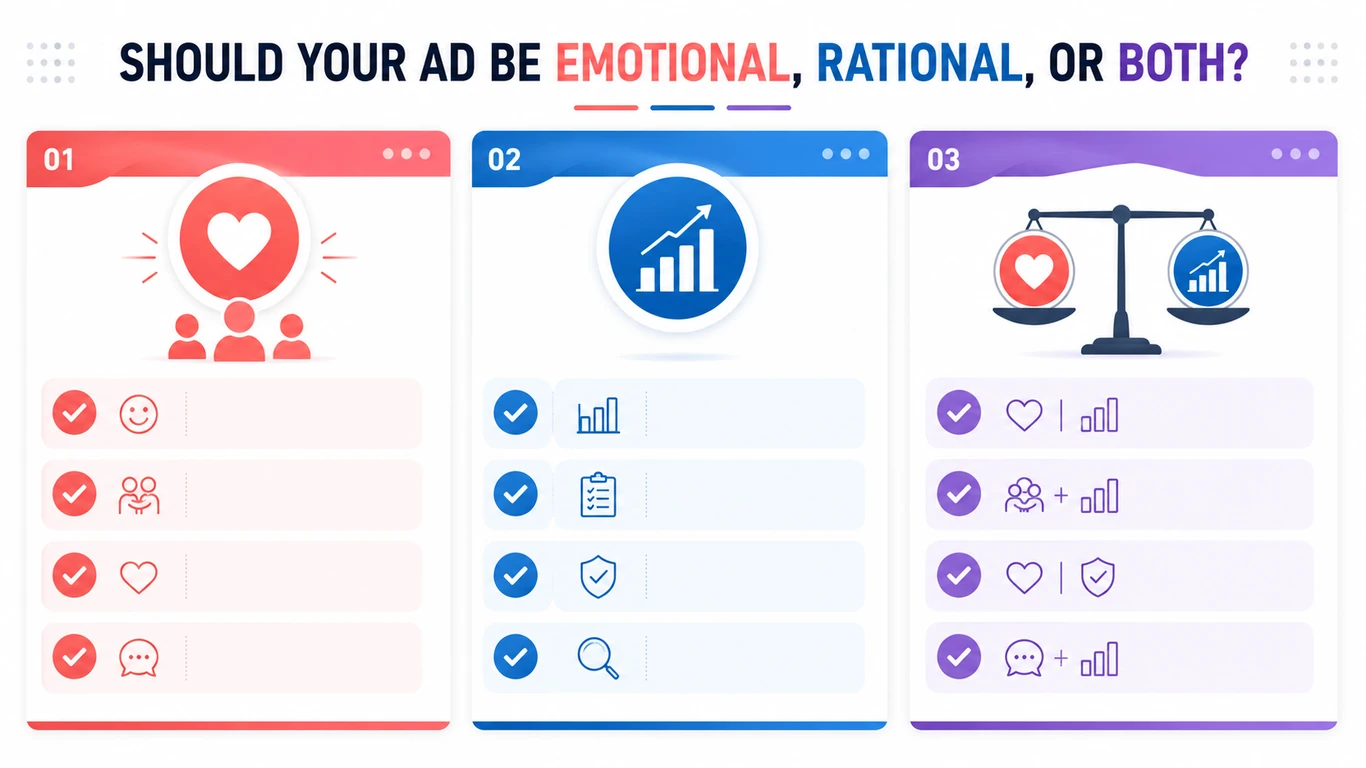
Emotional advertising focuses on feelings like trust, desire, confidence, fear, comfort, or belonging.
Rational advertising focuses on logic, such as features, pricing, proof, comparisons, specifications, guarantees, and results.
Emotional advertising helps people care.
Rational advertising helps people feel confident about the decision.
Neither is always better.
Emotional advertising is better when the buyer needs connection, motivation, trust, or desire.
Rational advertising is better when the buyer needs proof, clarity, comparison, or risk reduction.
Many strong campaigns use both because people often feel first and justify later.
Use rational appeal in advertising when your customer needs facts before taking action.
This works well for B2B services, SaaS, healthcare, home services, high-ticket offers, and any situation where buyers compare options before making a decision.
Use emotional appeal advertising when your customer needs to feel trust, desire, confidence, relief, excitement, or belonging.
It works especially well for awareness campaigns, lifestyle brands, local businesses, and service brands that need stronger connection.
Yes.
B2B buyers still care about trust, confidence, risk, reputation, and career safety.
B2B emotional marketing works best when it is supported by rational proof, such as process, reviews, data, case studies, or clear service details.
Yes.
B2C buyers still care about reviews, pricing, quality, delivery, product details, and guarantees.
B2C emotional marketing often performs better when rational information supports the emotional message.
Yes.
In many cases, one ad should use both.
For example, an ad can start with an emotional pain point, then support the message with proof, features, reviews, pricing, or a clear offer.
Look at your audience intent, offer type, buyer journey stage, competition, platform, and conversion goal.
Emotional vs rational advertising is not a battle between feelings and facts.
It is about understanding what your customer needs before they are ready to act.
The strongest campaigns do not just get attention. They help people make decisions.
If your business needs advertising that connects emotionally and converts logically, Raadwindeal can help you build a campaign strategy based on your audience, offer, platform, and conversion goals.